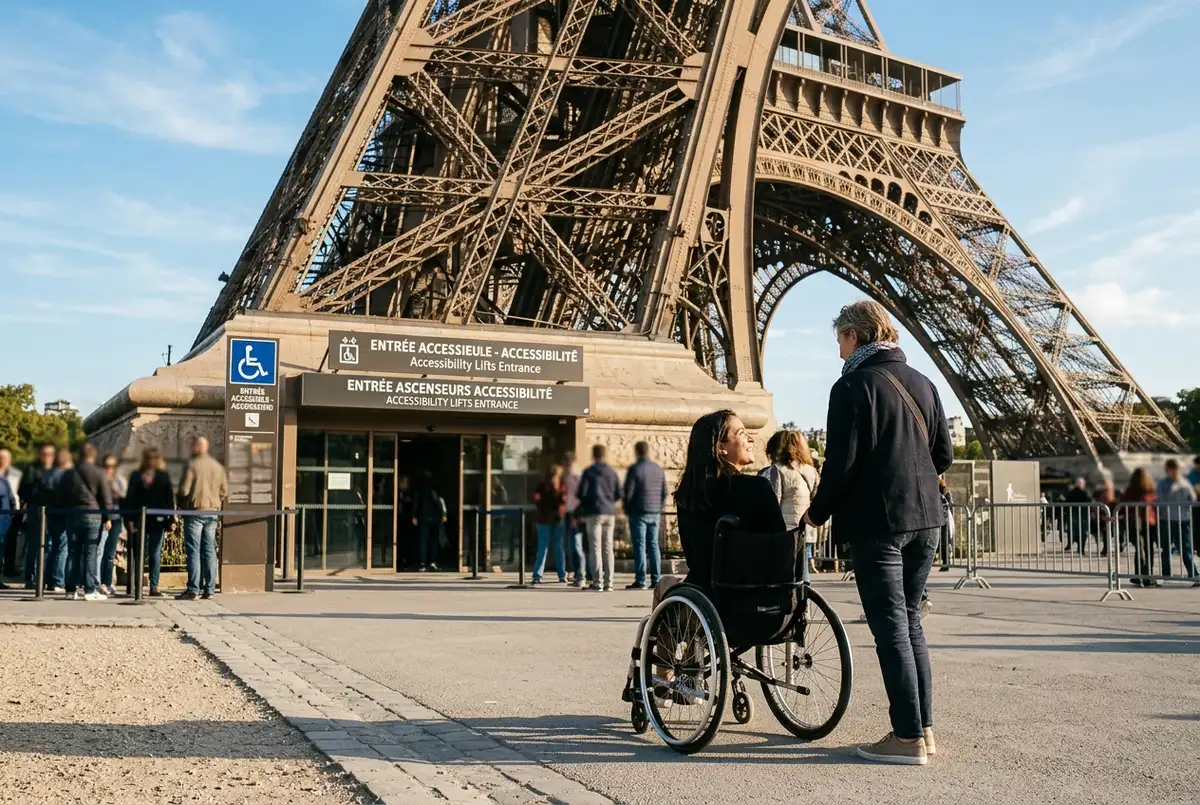
Eiffel Tower accessibility is good news with a caveat: the tower is served by lifts, so reaching the levels does not depend on the stairs, but the rules for specific levels, mobility aids and reduced-rate tickets change. I would not trust any blog, including this one, as the final word. Below I explain how to plan, which ticket I would pick and exactly what to confirm with the operator before you pay.
Can you visit the Eiffel Tower with reduced mobility?
Yes, planning helps. The tower has lifts to its levels, so a visit does not require climbing. The stairs climb is a separate product, and I would not use it if mobility is limited.
Here is the honest structure of my advice. Use the lift, book a reserved slot to cut the waiting and confirm the current rules on the official site before you go. I say confirm because lifts can be under works, some levels can be restricted on some days and policies on mobility aids get updated. If you are travelling with a companion, tell them the plan before the day.
Which levels can you reach by lift?
The lifts serve the first floor, the second floor and the summit, with a second lift ride for the top. The listings in this collection describe the elevator route to the second floor and then a further lift to the summit.
My advice is to plan by level, not by ticket name. Ask yourself which level matters most, and check whether that specific level is open and accessible on your date. The summit adds a second lift and a second wait, so it is the level I would think about most carefully. For the difference between what you see at each level, my pillar on Eiffel Tower opening hours links every planning topic, and the operator’s site has the current status.
How do tickets for disabled visitors work?
The official operator has offered reduced-rate options for disabled visitors and, in many cases, a companion arrangement. I will not print prices or conditions, since they change and I do not want to send you to the wrong window.
What I would do is check three things on the official site: whether a reduced rate exists for your situation, what proof is required and whether you can book it online or must buy at the tower. If you are searching for the “eiffel tower disabled tickets price”, the honest answer is that it depends on the current tariff. Bring any documents the operator asks for, and keep a digital copy on your phone.
Is the stairs climb accessible?
No. The stairs climb is 704 steps to the second floor, and its listing says it suits fit visitors. I would skip it if you have any mobility limit.
The stairs climb ticket starts from EUR 32 per person, dated 2026-09-21, and it does not include pre-reserved or priority access. The listing says a lift ticket is a better fit for anyone with limits and for peak days. My view is blunt: if walking a long way is hard for you, do not choose this one, however cheap it looks.
What is the best ticket for accessibility?
An elevator ticket with reserved access is my pick. It uses the lifts, it removes the ticket line and it fixes your time, which matters when standing is hard.
The elevator ticket with second floor and summit access has reserved access to the first and second floors, and it starts from EUR 79 per person. The listing describes it as a fit for visitors who like to explore at their own speed, since there is no fixed end time inside the tower. Prices are “from” figures dated 2026-09-21 and vary by date and option, so check the live price. For a fuller explanation of how the lifts work, read my page on Eiffel Tower elevator tickets.
How bad are the queues with limited mobility?
They can be tiring, even with a lift ticket, because a reserved slot removes only the ticket line. Security and the lifts still have waits.
I would book the first slot of the day, since the lines are calmer and you avoid standing in the heat. The security check applies to everyone, so keep your bag small and your documents handy. For a plain guide to the three lines, read my page on Eiffel Tower queue times. If you can, ask the operator whether any priority arrangement applies to your situation, rather than assuming.
How do you get to the tower step-free?
Plan the journey before the visit. Some metro stations have stairs and no lifts, and works can change what is open, so I would check the transit operator for step-free options on your route.
A taxi is worth it if the metro is hard, and buses have no station stairs. Ask the driver to drop you near the Champ de Mars side, then plan the last stretch. My guide on how to get to the Eiffel Tower compares the routes, and I would choose the option with the fewest steps over the fastest one.
What about the summit and the glass floor?
The summit is reached by a further lift and has its own wait, and the first floor glass floor is a quick stop. Confirm both with the operator, since access details can change.
My honest view is that the second floor gives most of the classic skyline with less effort. If standing in a long line is hard, I would choose the second floor and see how you feel. The summit is colder and windier than the levels below, and the listings warn about queues there. Decide once you have seen the view from the second floor.
Are the levels ever closed to visitors?
Yes. Works, weather and strikes can close a level or the whole tower on a given day. This matters more if you have booked a specific accessible arrangement.
I would check the official status on the morning of your visit. If a level is shut, your booking terms say what happens next. My page on Eiffel Tower closures and the summit being closed explains the usual reasons and how to react. A short check before you leave your hotel saves a lot of frustration.
Is the visit comfortable with a companion or carer?
Usually yes, but confirm the arrangement in advance. Companion rules differ by ticket and by situation, and I would not assume a companion travels free.
My advice is to plan seats, breaks and a timeline before you go. Allow more time than the standard visit, since a full visit with both levels takes two to three hours according to the listings. My timeline in how long an Eiffel Tower visit takes shows the steps. I would leave an hour of buffer before any dinner or train.
What about visitors with a child in a stroller?
Rules on strollers can change, so confirm them on the official site. A baby carrier moves faster through the lifts and the crowd, and that is my pick for toddlers.
For family advice, read my page on the Eiffel Tower with kids. Keep the first visit to one level, and a slot early in the day. It is a small change that makes a big difference for anyone who has to manage a child and a lift queue together.
Is anything different for visitors with hearing or sight loss?
Support varies, and I cannot promise specific services. What I can say is that the audioguide ticket delivers commentary through an app, which can help some visitors.
The listing for the audioguide ticket says the audio is delivered as an app, and you can pause, replay or skip parts. That flexibility helps if you like your own pace. For anything specific, contact the operator before booking and ask what support exists. It costs nothing, and it removes guesswork.
Where should you confirm the current rules?
The official site is the source, and your booking terms cover your ticket. I would check both before you pay and again on the morning of your visit.
Look for the accessibility section, the current status of the lifts and the conditions on reduced-rate tickets. Do not rely on a screenshot or an old forum post. Rules change, and a two minute check is worth more than my advice or anyone else’s. You can start at the official Eiffel Tower website.
My recommendation
Choose the lift, not the stairs. Book a reserved slot in the morning, keep your bag small and confirm level access and reduced-rate rules with the operator before you pay.
My pick is the elevator ticket with second floor and summit access, with the summit as a decision you make on the day. To compare every option, visit the Eiffel Tower tickets homepage.
Frequently asked questions
Is the Eiffel Tower wheelchair accessible?
The tower has lifts to its levels, but specific access rules change. Confirm the current details on the official site before you book.
Are there Eiffel Tower tickets for disabled visitors?
The operator has offered reduced-rate options in the past. Check the official tariff and required proof before you pay.
What is the Eiffel Tower disabled tickets price?
It depends on the current tariff, so I will not print a figure. The official site shows the current rate.
Can I use the stairs if I have limited mobility?
I would not. The stairs climb is 704 steps, so choose a lift ticket.
Which ticket is best for accessibility?
An elevator ticket with reserved access, because it uses the lifts and removes the ticket line.